Restore a tooth
with a crown
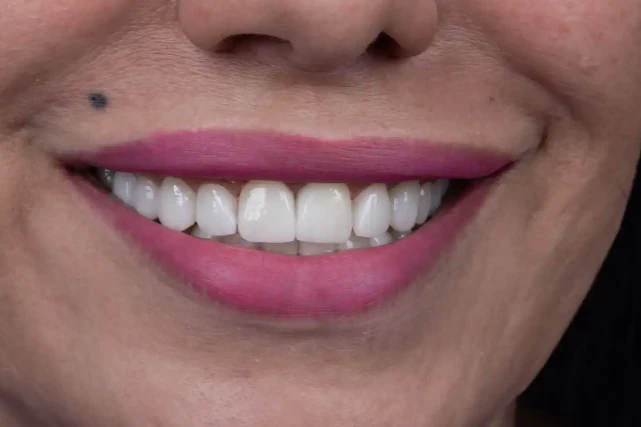
A dental crown is a fixed prosthesis that fully covers a damaged, decayed, devitalized or fragile tooth. It restores the shape, function and aesthetics of a natural tooth. Can also be placed on a dental implant to replace a missing tooth.
At our dental clinic in Tunis, crowns are manufactured in a CE-certified laboratory with premium materials (zirconia, e.max ceramic). All-inclusive price from €210 (vs €800–1,500 in Europe), 5-year lab warranty.
The 3 types of crowns
Modern ceramic material, biocompatible and highly resistant. Perfect aesthetics thanks to its translucency close to natural enamel.
Indication: all positions, bruxism.
Lithium disilicate glass-ceramic. Optimal translucency — indistinguishable from natural teeth on incisors and premolars.
Indication: visible front teeth, Hollywood smile.
Metal cap (cobalt-chrome or nickel) covered with ceramic. Very resistant but aesthetics inferior to zirconia.
Indication: posterior molars, limited budget.
When is a dental crown needed?
Root-canalled tooth
After a root canal treatment, the tooth becomes fragile. A crown protects it from fractures and restores chewing function.
Extensive decay
When decay has destroyed more than 50% of the tooth, a filling is no longer sufficient. The crown rebuilds the entire visible part.
Fracture or crack
After an impact, a cracked tooth must be covered to prevent propagation to the root.
On implant
The crown is the visible part of a dental implant. It is screwed or cemented on the abutment.
Treatment in 2 appointments
Tooth preparation
Local anaesthesia, tooth reduction (1-2 mm) to create space. 3D digital impression for the lab.
Temporary crown
Placement of a resin temporary crown to protect the tooth while the final one is being made (3-5 days).
Lab manufacturing
CAD/CAM. The final crown is custom milled then glazed by a ceramist.
Final placement
Try-in, occlusal adjustment, cement (or screw on implant). Immediate and durable result.
In summary: the dental crown in Tunisia is the reference solution to restore a damaged tooth or place it on an implant. From €210 (PFM) or €300 (zirconia), 4× cheaper than in Europe, with CE-certified laboratory and 5-year lab warranty. Send your panoramic for a free quote within 24h.
Frequently asked questions
What is the difference between a zirconia crown and a ceramic-on-metal crown?
A ceramic-on-metal crown (PFM) is older: a metal core is covered with ceramic. It can cause a grey line at the gum level over time. A zirconia crown is entirely ceramic: no metal, complete biocompatibility, better translucency and longer lifespan (15-25 years). For optimal aesthetics and healthy gums, zirconia is today’s reference.
How long does crown placement take?
Crown placement takes place over 2 appointments separated by 5 to 7 days of laboratory fabrication. Appointment 1: tooth preparation, digital impression, provisional crown. Appointment 2: try-in and definitive cementation. Total clinical time: approximately 2 hours. For an implant crown, the same duration applies during the second stay.
Can a zirconia crown break?
Zirconia is extremely strong (900-1,200 MPa) and fracture is very rare under normal conditions. The risk increases in cases of severe bruxism, impacts, or unchecked occlusion. In the event of a proven fracture, Implant Dentaire Tunisie replaces the crown at no additional cost during the warranty period.
Is the crown in Tunisia made from the same materials as in France?
Yes. Implant Dentaire Tunisie uses zirconia blocks from recognised European brands (Ivoclar, Kuraray, GC Initial) and precision sintering furnaces. The technical specifications (grade, colour, translucency) are identical to those used in French dental laboratories. The quality of the final result depends more on the technician’s precision and the digital impression than on the material brand.
Crown lifespan: Zirconia and e.max ceramic crowns last on average 15 to 20 years with proper hygiene. They are guaranteed 5 years (laboratory) at our clinic. The underlying tooth remains alive (unless previously root-canalled).
Crown on missing tooth: Single Dental Implant Tunisia →
Several adjacent teeth: Dental Bridge Tunisia →
Related pages
All the topics around your treatment, explored in depth by our team.
Get Your Free Quote — Implant Dentaire Tunisie
Transform your smile today
Our medical team analyses your case for free and provides a personalised treatment plan within 24h.
- Phone / WhatsApp
+216 53 826 390 - Implant Dentaire Tunisie Clinic Tunisia
Tunis, Tunisie
El Manar 2 - Opening hours
Mon – Sat: 8am – 8pm
WhatsApp & Email : 7/7